

A complete guide for self-managed HOAs

I have worked with hundreds of self-managed HOA boards across the country. I have seen communities thrive under self-management, and I have also watched boards struggle when they don’t have the right systems in place. I have learned that self-management isn’t about doing everything yourself, but it is about working smarter.
If you are a part of a community with fewer than 200 units, there is a good chance your HOA handles its own management. This approach makes sense for smaller homeowners’ associations because they typically don’t have the budget or complexity that would justify hiring a full-service property management firm. National data reveals that professional management services typically run about $10-20 per unit monthly, though costs can climb as high as $20-50. If you are managing a 100-unit community, you are looking at monthly expenses ranging from $1,000 to $5,000. For really small HOAs with fewer than 25 units, those management fees could eat up a major chunk of your yearly budget.
When you eliminate those management costs, your board gains the flexibility to channel money toward maintenance projects, building up reserves, or simply keeping monthly dues more affordable for everyone. Plus, self-managed boards get to make decisions and put them into action immediately, which translates to quicker responses and rules that actually reflect what your community cares about. Since everyone on the board lives in the neighborhood, residents typically feel more at ease bringing up concerns and see exactly where their money goes.
The flip side? You are depending on volunteers who haven’t been professionally trained. When you are dealing with something as intricate as HOA finances, it can get tricky. Take accounting regulations, for instance. There are laws and rules governing HOA bookkeeping, and volunteer board members without specialized training might struggle to stay compliant. But here is the good news: I am going to walk you through everything you need to know about running a self-managed HOA like a pro, and give you a secret formula for successful accounting, bookkeeping, and financial report generation.
When should an HOA consider self-managing?

If you’re currently running or thinking about making the switch to a self-managed HOA, you are definitely not alone. Based on the latest Community Associations Institute statistical review, somewhere between 30-40% of community associations manage themselves. As we move into 2026, there are roughly 373,000 community associations throughout the country. Using 35% as our benchmark for self-managed associations, that gives us approximately 130,550 communities handling their own management. So clearly, plenty of communities are making this work. Here is a simple checklist I use when I’m helping boards figure out if self-management makes sense for their situation:
- My board has competent volunteers who are willing and able to handle management responsibilities.
- Homeowners in our community understand and support the benefits of self-management.
- Our community is small to medium in size, with amenities that neighbors can reasonably manage.
- Our HOA can stay compliant with regulations without needing to hire a property manager.
- Our community prioritizes careful budgeting and wants to keep homeowner dues as low as possible.
- Our community values creative problem-solving and is comfortable finding our own solutions to management challenges.
But maybe you have heard that self-management is too difficult, and that the workload is overwhelming? Well, here is something that might surprise you: board members don’t need to handle everything by themselves. Perhaps the self-managed community board member who warned you about the workload wasn’t using the approach I’m about to share with you. But before I get into the strategies for successful management, let me outline what a self-managed HOA board is actually responsible for.
Core responsibilities of a self-managed HOA board
When you self-manage, board members take on the everyday operations and upkeep of the community. You are also the primary point of contact for homeowners, which means fielding phone calls, handling requests, collecting HOA fees, documenting violations, mediating conflicts, and more.
The HOA board communicates with contractors to arrange maintenance work and connects with municipal officials to make sure you are meeting legal requirements. Managing finance represents another major piece of the puzzle. You’ll handle accounting and budget planning, create financial statements, oversee community funds, and tackle various other money-related tasks. And it is not just about the big decisions you make during quarterly meetings. It is the daily and weekly tasks that keep everything running smoothly. When these duties get pushed aside, even briefly, problems surface quickly. Let me break down what you are truly responsible for.
Managing finances
You are responsible for collecting fees, making vendor payments, monitoring income and expenses, and ensuring your community remains financially healthy. This includes keeping tabs on who has paid up, reaching out to homeowners who are behind, balancing bank statements, and keeping your budget aligned.
Your board must also develop yearly budgets, submit taxes when required, and keep financial records available for homeowner review. Every single dollar coming in or going out needs clear documentation, not scattered across personal accounts or buried in email chains.
Here is what I recommend: create a practical budget every year. Review your actual spending against the budget each month and make adjustments when needed. Contribute to the reserve steadily. Small, regular deposits beat emergency special assessments every time. Only approve invoices that come with supporting contracts and detailed scopes, and stay away from vague “miscellaneous” line items. Give owners transparent financial statements to earn their trust.
Meetings and records
Every meeting requires an agenda prepared beforehand, accurate minutes taken during the meeting, and decisions recorded in a way that future boards can actually reference. This isn’t just about checking boxes for compliance; it is about shielding your board from conflicts and ensuring everyone understands what is happening.
Here is what works: set up recurring board meetings on a monthly or quarterly basis and publish the schedule well in advance so people know what to expect. Use agendas to manage time for each topic and include time for owner input. Between meetings, board members need to check email questions, authorize invoices, and make smaller decisions. For larger projects, set aside extra time for gathering bids and providing oversight.
Rules and violations
Enforcing community rules fairly means recording violations, delivering notices, following through consistently, and making sure similar situations receive similar treatment. You want to be fair, but it can feel like you are walking a tightrope between enforcement and maintaining good relationships with neighbors.
The real challenge usually isn’t the rules themselves, but it is about applying them consistently when you are dealing with actual people you run into every day. One board member might take a hard line on lawn care, while another is more relaxed about parking. Without a uniform process, homeowners pick up on the inconsistency, and suddenly, you are getting complaints about playing favorites. In fact, a recent study I conducted showed that 43% of homeowners view enforcement as unfair, while boards constantly feel under pressure.
Here is my advice: apply your CC&Rs consistently and fairly. Send written violation notices and give people a chance for a hearing before you impose fines. Record all actions in your meeting minutes. Turn to mediation or an unbiased committee to settle neighbor disagreements when casual conversations don’t work. Remove yourself from votes where you might have a personal stake.
Communication
Beyond enforcement, you need to establish a main communication channel for your community. Homeowners want answers about dues, maintenance schedules, rule updates, and upcoming work. When they can’t get straightforward information from your board, frustration builds rapidly.
From my experience, this is my suggestion: share board agendas and meeting announcements ahead of time. Distribute minutes quickly and make sure they capture key decisions and votes. Send out email updates and regular newsletters to keep owners in the loop about projects, finances, and upcoming elections. Set up a secure online space where owners can access governing documents, financial reports, and contact details. Clear, transparent communication cuts down on confusion and helps prevent arguments.
Vendor management and maintenance
Build a maintenance schedule for regular tasks like landscaping, snow clearing, and pool service, and inspect shared areas regularly. Get several quotes for major projects, check contractors’ insurance and references, and put clear contracts in place. Monitor the work to make sure it meets your specifications. Keep records of warranties and maintenance schedules.
Legal obligations and fiduciary duties
No matter how small your HOA is, every board owes fiduciary duties to the association and its members. State nonprofit corporation laws spell out these duties. For instance, the Colorado Revised Nonprofit Corporation Act requires board members to act in good faith and exercise the care that an ordinary prudent person in a similar position would use under comparable circumstances. Here are the key obligations:
Duty of care and due diligence
Board members need to prepare for meetings, raise questions, and bring in experts when necessary. Your decisions should come from reasonable investigation and informed thinking. Glossing over budgets or ignoring legal guidance could be considered negligence.
Duty of loyalty and conflict of interest
Directors must prioritize the association’s interest over their own financial gain. You must disclose conflicts of interest and step aside from votes that involve your own money or businesses.
Duty of confidentiality
Boards work with sensitive details like owner payment delinquencies and violation records. Directors must safeguard confidentiality and limit access to people who are authorized.
Recordkeeping and transparency
State laws frequently specify which records you must keep and provide to unit owners. Whatever your jurisdiction, a self-managed board should maintain minutes, budgets, contracts, insurance documents, and correspondence. Make documents available to owners through a secure online portal to encourage transparency and comply with record-request regulations.
For example, in a state like Colorado, the Common Interest Ownership Act lays out the records that must be produced and those that can be kept private. States like Florida, Texas, and Nevada even require HOAs above certain sizes to operate a website where homeowners can access governing documents and financial records. Beyond that, most states have transparency requirements mandating that HOAs make the governing documents and financial information accessible to residents.
Insurance and risk management
Volunteer board members shouldn’t put their personal assets at risk. Directors and Officers insurance provides protection against lawsuits claiming mismanagement. Solid D&O policies for average-sized communities usually cost $1,000 to $2,000 each year. Premiums below $700 often suggest insufficient coverage. Boards should also carry general liability and property insurance.
Roles of each board member in a self-managed HOA
Operating an HOA without professional assistance means the board must handle all operational functions, but for everything to run smoothly, each board member needs clarity on their specific responsibilities. Beyond the tasks the board handles collectively, here is what each officer typically does:
How to run a self-managed HOA without losing your mind
Here’s how to pull everything together without burning out. The secret isn’t putting in more hours; it is about building systems that take care of routine work so you can concentrate on actual decision-making.
Centralizing records
Stop keeping meeting minutes in one person’s email inbox, financial records in someone else’s spreadsheet, and governing documents on yet another person’s computer. Everything connected to your association should exist in one central hub that doesn’t vanish when someone steps down from the board.
This means gathering all your bylaws, CC&Rs, budgets, meeting notes, violation records, and correspondence in the same system. When a homeowner requests last year’s financial statement or a new board member needs context on past decisions, you know precisely where to find it.
Centralizing also safeguards your community. When records are disorganized and informal, you risk losing vital information during board transitions. Even worse, you might not be able to produce necessary documents during disputes or audits.
Standardizing communication
Establish clear pathways for how homeowners contact your board and how your board replies. Maybe it is a dedicated email address, a community website, or set office hours, but it shouldn’t be random text messages and personal calls at all times of day.
Standardized communication also means delivering consistent information. When three different board members provide three different explanations about the same pool closure, homeowners don’t know who to trust. Document your decisions, share them through official channels, and make sure everyone’s working from the same playbook.
This protects your personal time, too. Without boundaries, you’ll find yourself answering individual questions around the clock instead of addressing issues once for the whole community.
Tracking violations
Don’t depend on memory or casual notes when it comes to enforcement. Every violation requires a dated record showing what occurred, what notice went out, and how the situation was resolved. This isn’t about being inflexible; it is about being fair and protecting your board. When you can demonstrate that you have enforced rules consistently and followed proper procedures, you are protected if someone challenges your actions.
Tracking finances
This is one of your most vital functions because, without it, your HOA will run out of money. Unfortunately, it is also one of the toughest when handled manually. I have watched boards struggle with spreadsheets that work fine until they don’t. You might be pursuing late payments while juggling the budget, and it is draining without a proper system. Miss a few follow-ups, and suddenly you are short on funds when a repair invoice arrives. Lose track of spending, and you won’t realize you are over budget until it is too late to fix it. Small gaps turn into big problems when they pile up.
Now, let us add another complication: some states mandate HOA audits. For example, Florida requires certain associations to conduct independent audits. In California, the civil code mandates that associations commission a financial review by a CPA if their gross income tops $75,000 annually. In many situations, the association bylaws will demand an HOA audit regardless of whether state laws specify it. Since it is the HOA board’s obligation to follow its own covenants, an annual HOA audit becomes mandatory.
Here is where things get complicated. During an audit, the CPA thoroughly examines the association’s financial records, bank statements, income, expenses, and financial management practices. The purpose of an audit is to confirm the accuracy of the HAO’s financial statements and verify that they comply with legal standards and generally accepted accounting principles. That means the HOA must use the accrual basis accounting method, which is the only approach that conforms with GAAP and is regarded as the most dependable for reporting. Now, imagine a scenario where board members have little or no accounting background. But don’t worry. Let me share the promised formula for success.
Leveraging a unified HOA management system
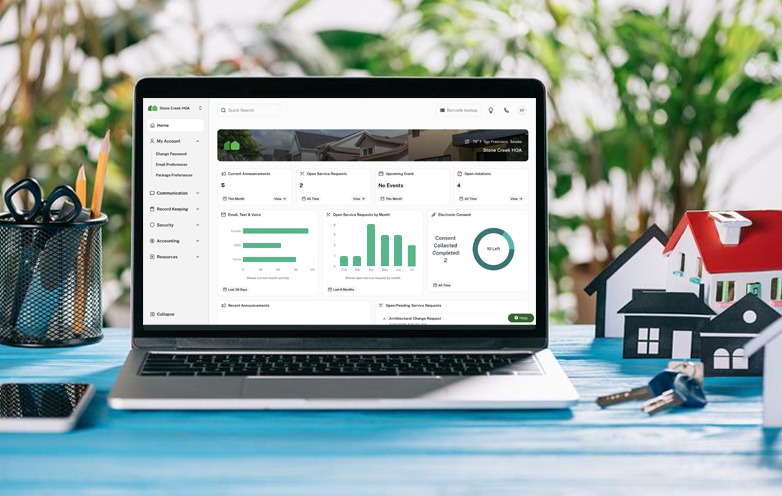
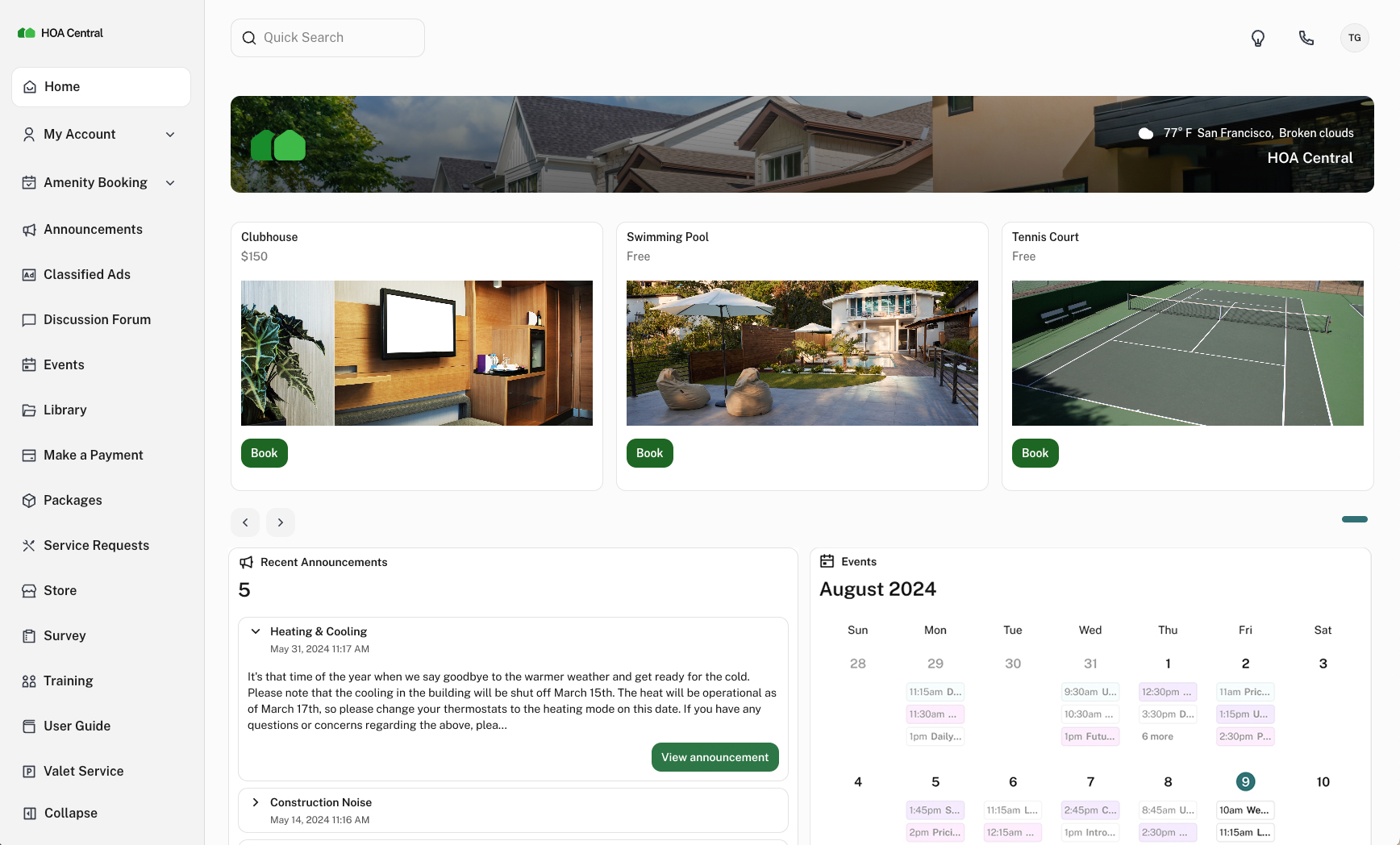
This is the secret ingredient for successful self-managed HOAs. Get an end-to-end management platform built specifically for self-managed HOAs, like HOA Central. The major advantage of a platform like HOA Central is that it understands all the processes and workflows involved in self-managed HOA operations. It brings together all the essential functions I mentioned above: communication, vendor management, invoice routing and approvals, fee collection, and financial reporting.
For example, homeowners simply pay their fees online through their personal portals, and the system automatically records the transaction in the correct ledgers. When you need to pay vendors, they submit invoices through their portals, and once you give approval, the system pays them electronically on its own. Then you don’t have to stress about audits. Since all your data lives in the system and it knows the proper accounting methods, you just generate financial reports whenever you need them.
Transitioning to self-management
If your HOA currently works with a professional management firm, and after reading about the self-managed HOA success formula above, you feel ready to take on self-management, a well-planned transition helps you avoid service gaps. Let me walk you through the steps I recommend:
- Evaluate board readiness: start by talking through self-management with your fellow board members and engaging the volunteers. Create a list of every task your management company currently handles, from collecting dues and paying bills to coordinating vendors and preparing annual meeting notices, and determine which tasks your board can take on. Be honest about the time and skills you have available.
- Review your management contract: most management contracts need advance notice for termination. A 30-day notice is typical, but some agreements call for 60 to 90 days. Read through the termination section carefully, take note of any penalties, and plan your end date accordingly. Get legal advice before sending the notice.
- Check your governing documents and vote: confirm that your CC&Rs and bylaws permit the board, and membership if necessary, to switch to self-management. You might need to hold a vote or amend your governing documents. Win homeowners’ support by explaining your reasons and the benefits of self-management.
- Collect records and assets: ask for all association records from your outgoing manager, such as financial statements, bank accounts, reserve studies, contracts, insurance policies, violation files, and architectural records. Save copies of both digital files and paper documents. Make sure the board has signing authority on bank accounts and that funds transfer properly.
- Set up tools and processes: put systems in place for accounting, document storage, communications, and maintenance tracking. I strongly recommend you go for HOA-specific software like HOA Central to automate dues billing, online payments, accounting, and resident portals.
- Assign roles and train volunteers: distribute responsibilities among officers and committees using the roles I outlined earlier. Offer training on basic accounting, contract review, and meeting procedures. For the management software, the vendor’s implementation team usually helps out with training.
Final thoughts
Self-managing an HOA brings genuine benefits, such as reduced costs, better transparency, and a tighter-knit community. But it is not a shortcut. Boards must invest time, develop new skills, and fulfill fiduciary responsibilities. But here’s the best part: You don’t have to do all of this manually. Simply adopt an end-to-end platform, and you’ll have a hub where you manage meetings, documents, payments, and communications. The system eliminates complexity by providing you with a single place where all your association work takes place.